


Bacterial tubular networks channel carbohydrates in insect endosymbiosis
- David Ojcius
- Dec 31, 2025
- 1 min read

Highlights
•V olume electron microscopy unveils intensive membrane networks in insect symbiotic cells
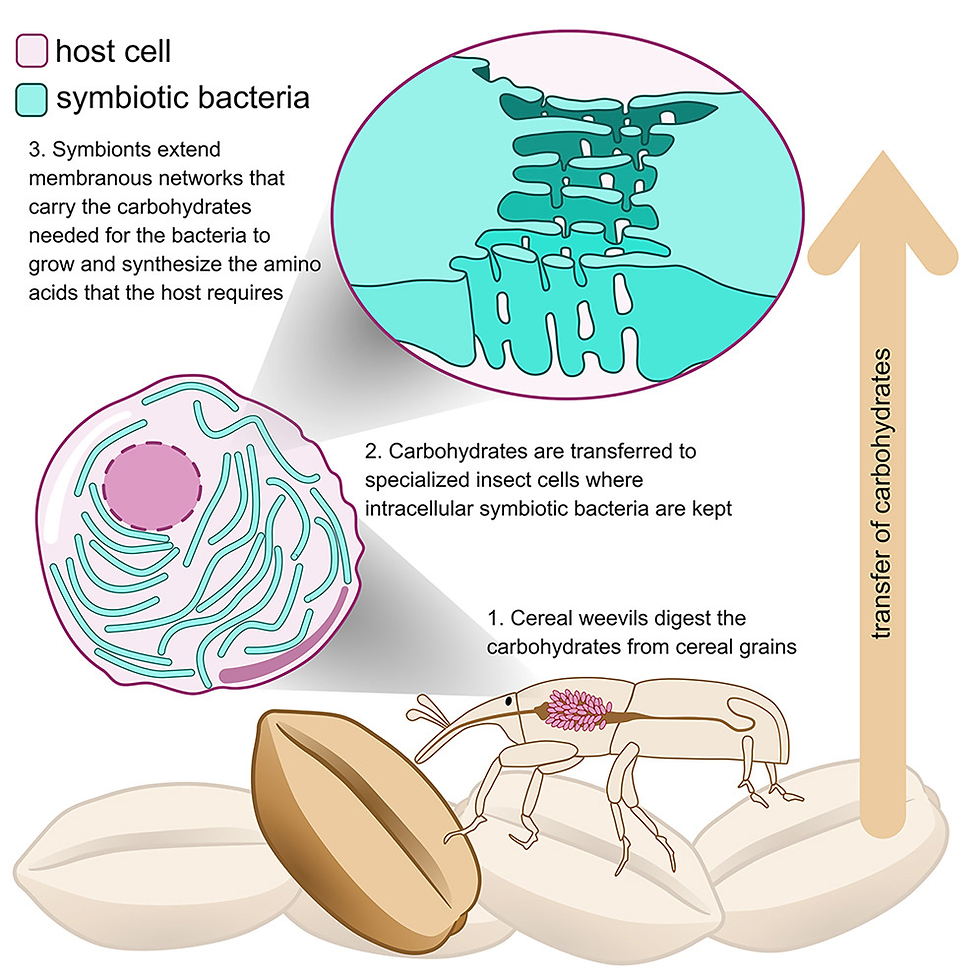
• These tubenets are formed by intracellular bacteria, the insect’s nutritional symbionts
• In situ high spatial resolution chemical analysis shows tubenets’ enrichment in sugar
• Bacterial tubenets increase the interface of exchange, maximizing nutrient acquisition
Summary
Symbiosis is widespread in nature and plays a fundamental role in organism adaptation and evolution. In nutritional endosymbiosis, host cells accommodate intracellular bacteria and act as a “metabolic factory,” requiring extensive metabolic exchanges between host and endosymbiont. To investigate the mechanisms supporting these exchanges, we used the association between the bacterium Sodalis pierantonius and the insect Sitophilus spp. that thrives on an exclusive cereal diet. Volume electron microscopy uncovered that endosymbionts generate complex membranous tubular networks (tubenets) that connect bacteria and drastically increase their exchange surface with the host cytosol. In situ high spatial resolution chemical analysis indicated that tubenets are enriched in carbohydrates, which are the main substrate used by bacteria to generate nutrients for the hdemoost. Multiple membranous structures favoring nutrient absorption are described in multicellular organisms. This work nstrates that bacteria have convergently evolved a similar “biostrategy” that enhances nutrient acquisition by increasing membrane interface.
Read full article for free (open access):


Comments