


Epigenetic phase variation in the gut microbiome enhances bacterial adaptation
- David Ojcius
- May 29
- 1 min read

Highlights
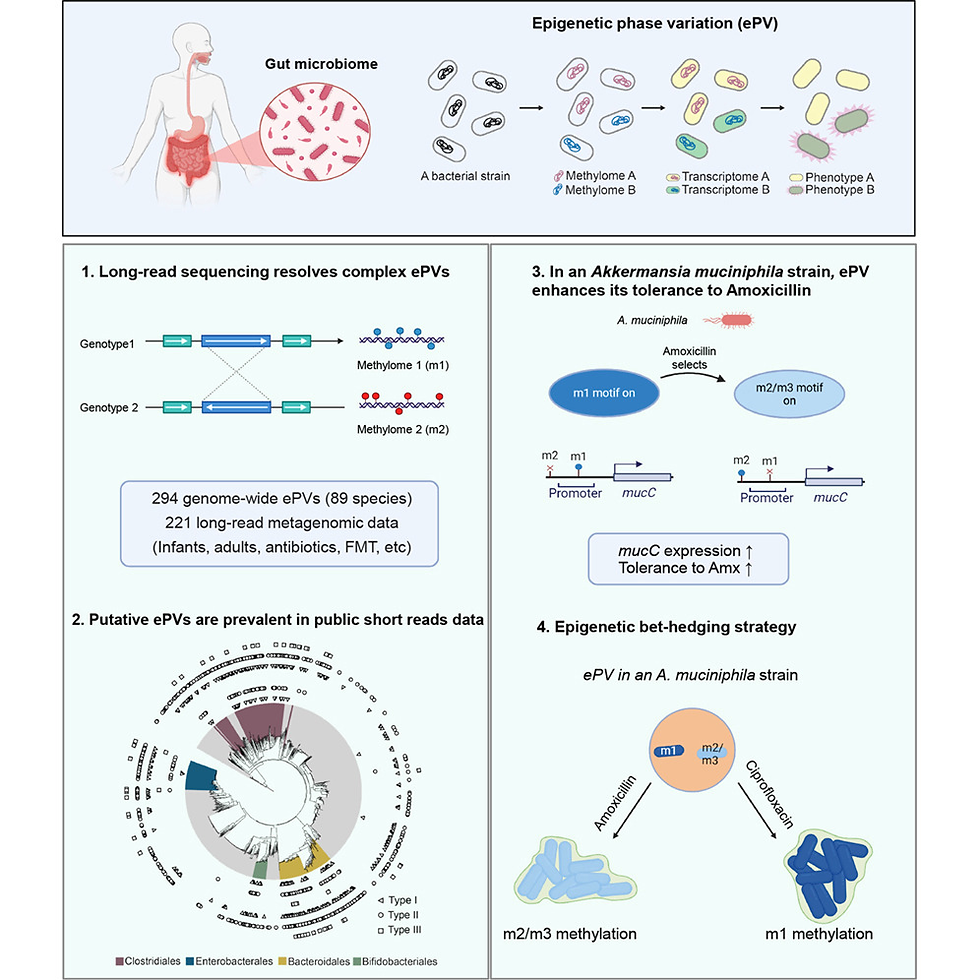
Epigenetic phase variations (ePVs) are prevalent in the human gut microbiome
Long- and short-read metagenomic data reveal ePVs associated with antibiotics and FMT
An ePV in an A. muciniphila strain regulates mucC, enhancing tolerance to amoxicillin
ePV creates intra-strain heterogeneity, enhancing bacterial adaptation via bet-hedging
Summary
The human microbiome continuously adapts to variations in diet and host physiology. Epigenetic phase variation (ePV) mediated by bacterial DNA methylation can generate phenotypic heterogeneity within clonal populations. ePVs have been characterized in human pathogens, but their roles in commensals remain unclear. Here, we cataloged ePVs in infant and adult gut microbiomes, revealing genome-wide and site-specific ePV in response to antibiotics and fecal microbiota transplantation. Long-read metagenomics revealed genome-wide ePV mediated by structural variations of DNA methyltransferases. Analysis of public short-read metagenomic datasets further revealed a high prevalence of genome-wide ePVs in the human microbiome. Site-specific ePVs were identified and associated with antibiotics or probiotic engraftment. Focusing on an Akkermansia muciniphila isolate, we find a specific ePV regulating mucC, a gene of unknown function but whose heterologous expression enhances bacterial tolerance to antibiotics via a bet-hedging strategy. Thus, epigenetic modifications are used by gut bacteria to adapt to fluctuating environments.
Read full article at:


Comments