


How Maternal Vitamin B12 Deficiency Drives Offspring Obesity via Bifidobacterium
- David Ojcius
- 1 day ago
- 1 min read

Highlights
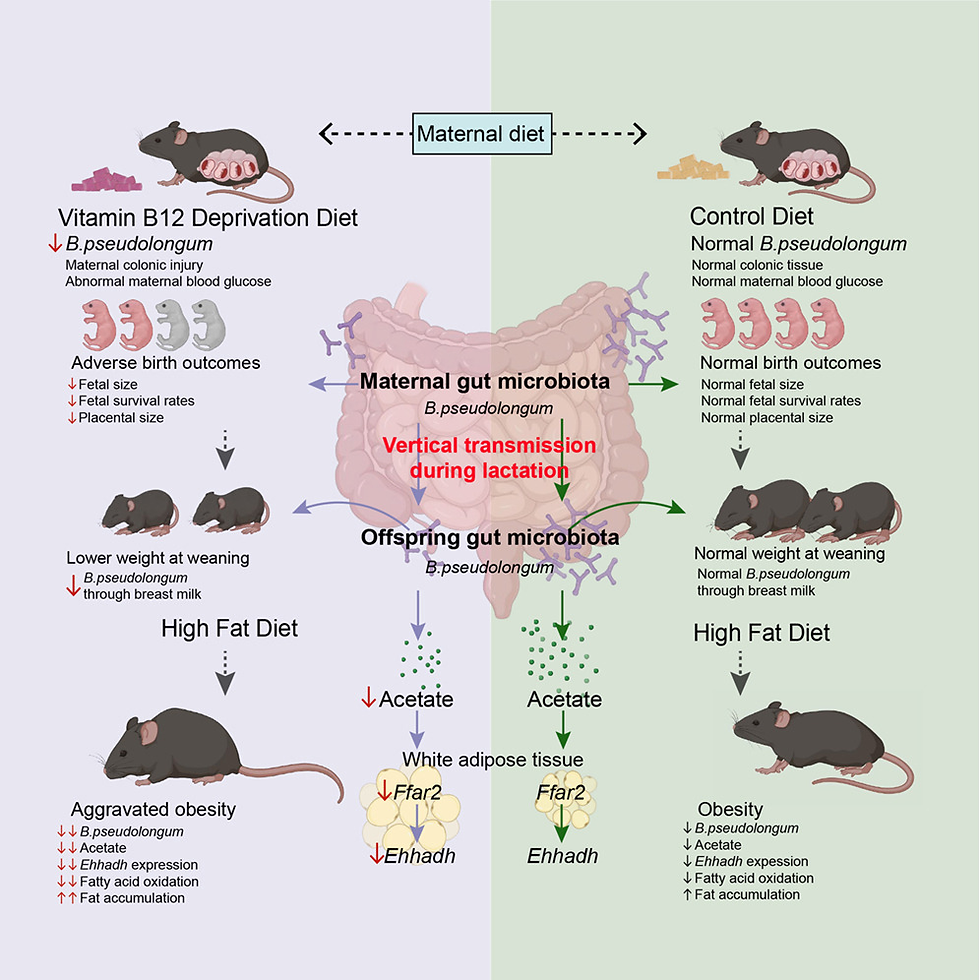
Maternal vitamin B12 deficiency aggravates offspring obesity
Vitamin B12 deficiency reduces B. pseudolongum in dams and offspring
Loss of B. pseudolongum during lactation worsens obesity in offspring
Restoring B. pseudolongum or acetate alleviates this obesity via Ffar2-Ehhadh
Summary
Vitamin B12 deficiency during pregnancy and lactation is common, yet its mechanistic impact on reproductive outcomes and offspring health remains poorly understood. Here, we show that maternal dietary vitamin B12 deprivation not only impairs maternal glucose metabolism and reproductive outcomes but also exacerbates high-fat-diet-induced obesity in offspring. These effects are mediated by gut microbiota and associated with a marked reduction of Bifidobacterium pseudolongum (B. pseudolongum) in both dams and their offspring. Maternal vitamin B12 deprivation limits early-life acquisition of B. pseudolongum in offspring during lactation, subsequently intensifying obesity and metabolic dysregulation. Early-life restoration of B. pseudolongum or its key metabolite, acetate, effectively ameliorates this aggravated obesity. Mechanistically, acetate acts through the Ffar2 receptor to upregulate Ehhadh expression. Together, these data establish that perinatal nutrition imprints long-term metabolic phenotypes in offspring via early-life acquisition of the gut microbiota, with a critical window during lactation.
Read full article at:


Comments